/retro-train
The Retro Train
Make it with your museThe Retro Train
Open this world on the wall, and make it with your muse.
all 9 frames of her, in this world ↓
The Retro Train Register: Bias-Cut Silk at Seventy Miles an Hour
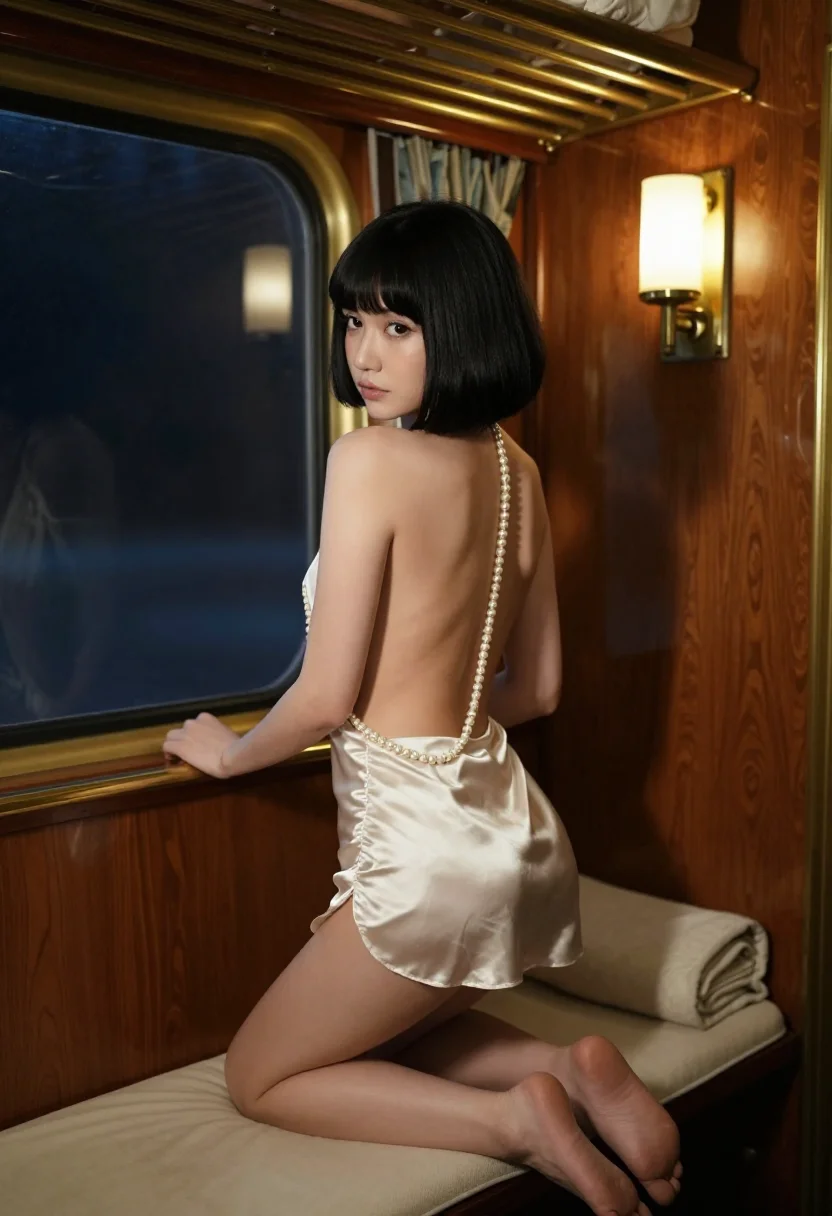
A first-class compartment is the most private room the 1920s built, and it was moving. The decade had just thrown out the century's architecture of whalebone, hooks and hoops, and replaced it with the bias cut: silk that follows the body instead of shaping it, hung from two narrow straps and gravity.
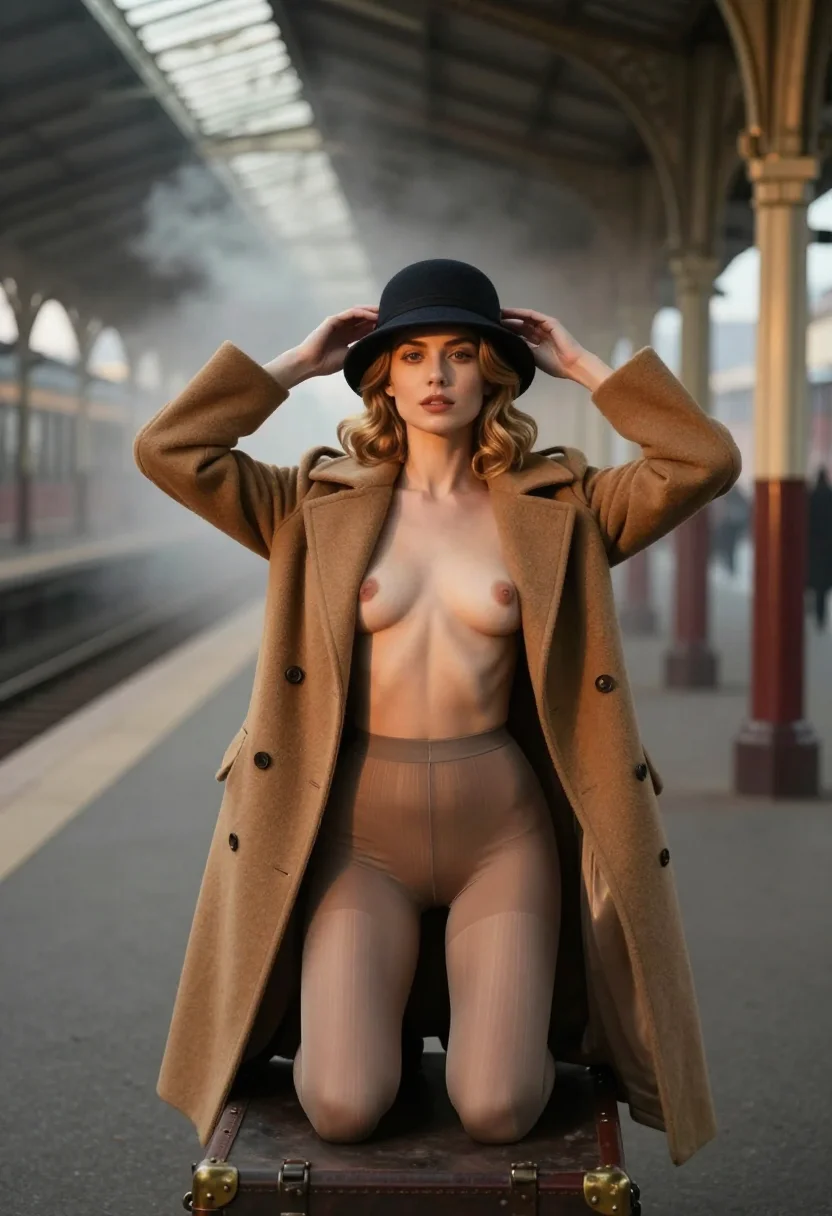
Three settings, three lights. The sleeper compartment opens it at night: one brass sconce, small and close beside the berth, walnut marquetry going to black in the corners. The dining car takes it into daylight at noon — broad cool light across starched linen, a stole draped over the dress, wine dark in cut crystal. The deco platform closes it at dawn — cold near-vertical light through a glazed roof, steam drifting low, a heavy travel coat worn over seamed stockings.
Every photo is photographic in composition and AI-generated in execution — the fast falloff of a small warm sconce, the flat behaviour of pearls under broad daylight. The muse varies by generation — a raven bob, honey-blonde waves, a finger-waved look — while the era and palette stay fixed.
Frequently asked questions
- Who is the woman in these photos?
- An AI muse, generated for this pack. She has no name and no real-world counterpart — every frame is composed from a written scene, then rendered.
- What are the three settings in this pack?
- AI-generated, staged across three settings: a bias-cut oyster silk dress in the sleeper berth, a stole draped over the same dress at white linen in the dining car, a travel coat worn over it on the platform.
- Is this the Orient Express?
- It is the register, not the trademark. The pack draws on the vocabulary of 1920s first-class rail travel — the wagon-lit berth, marquetry panelling, a dining car in starched linen, a glazed deco terminus — without depicting or naming any real company, livery or carriage.
- How is this different from the Second Empire pack?
- Sixty years and the whole silhouette. Second Empire is 1860s Paris — whalebone corsetry, a steel crinoline cage, candlelight. This pack is the 1920s: a bias-cut silk dress that follows the body, a bob, a rope of pearls, a train at speed.
- What are the three settings?
- Sleeper Compartment — night, walnut marquetry, one brass sconce close to the berth. Dining Car — noon, cool daylight over white linen, warmed by candle glow. Deco Platform — dawn, cold light through a glazed roof, cut by warm ochre off the ironwork.
- Who is in the photos?
- A muse you choose. 32 AI faces, none of them a real person.
Who This Pack Is For
- Art-deco and jazz-age fans searching 1920s portraits or art deco photoshoots who want a specific era and setting
- Anyone who wants a coherent nine-photo set aboard one train rather than unrelated single generations
- Readers of the Second Empire and Film Noir packs looking for another period register
- Adults curious about AI 1920s photography at an accessible entry price
About Ovid
Ovid is a house of pictures that were never taken. Most AI image tools ship one giant catalog of poses and aesthetics; the output looks like every other generated image on the internet. Ovid goes the other way. Each pack is a single editorial brief — light, styling, scene composed in the grammar of the great fashion editorials — hand-curated against real references and tested before it ships. Free preview before you pay. Packs are one-time. No template generator, no feed. A fashion house, not a catalog.