/second-empire
The Second Empire
Make it with your museThe Second Empire
Open this world on the wall, and make it with your muse.
all 9 frames of her, in this world ↓
The Second Empire Register: Whalebone, Crinoline and One Candle
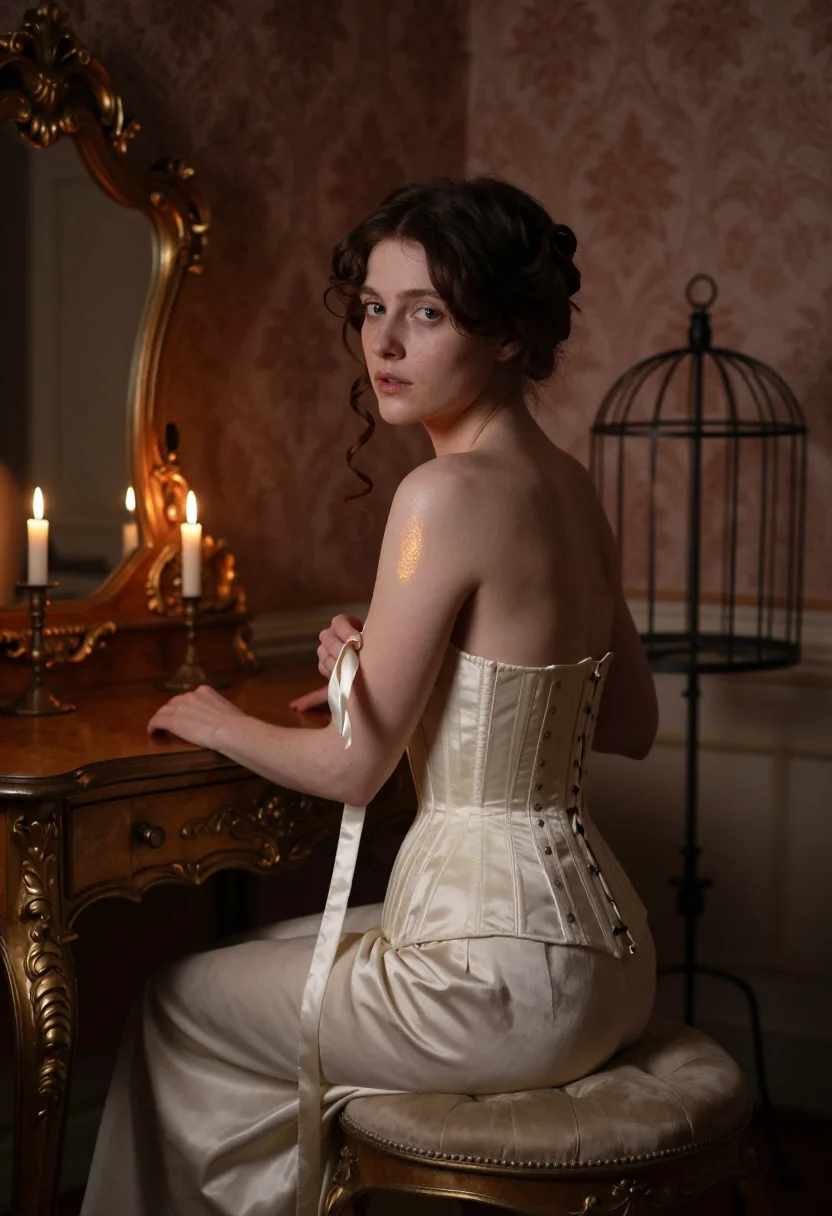
The Second Empire dressed women in engineering — whalebone sewn into figured silk, a cage of steel hoops, rows of eyelets down the one part of the back no arm reaches alone. This pack photographs that machinery coming apart.
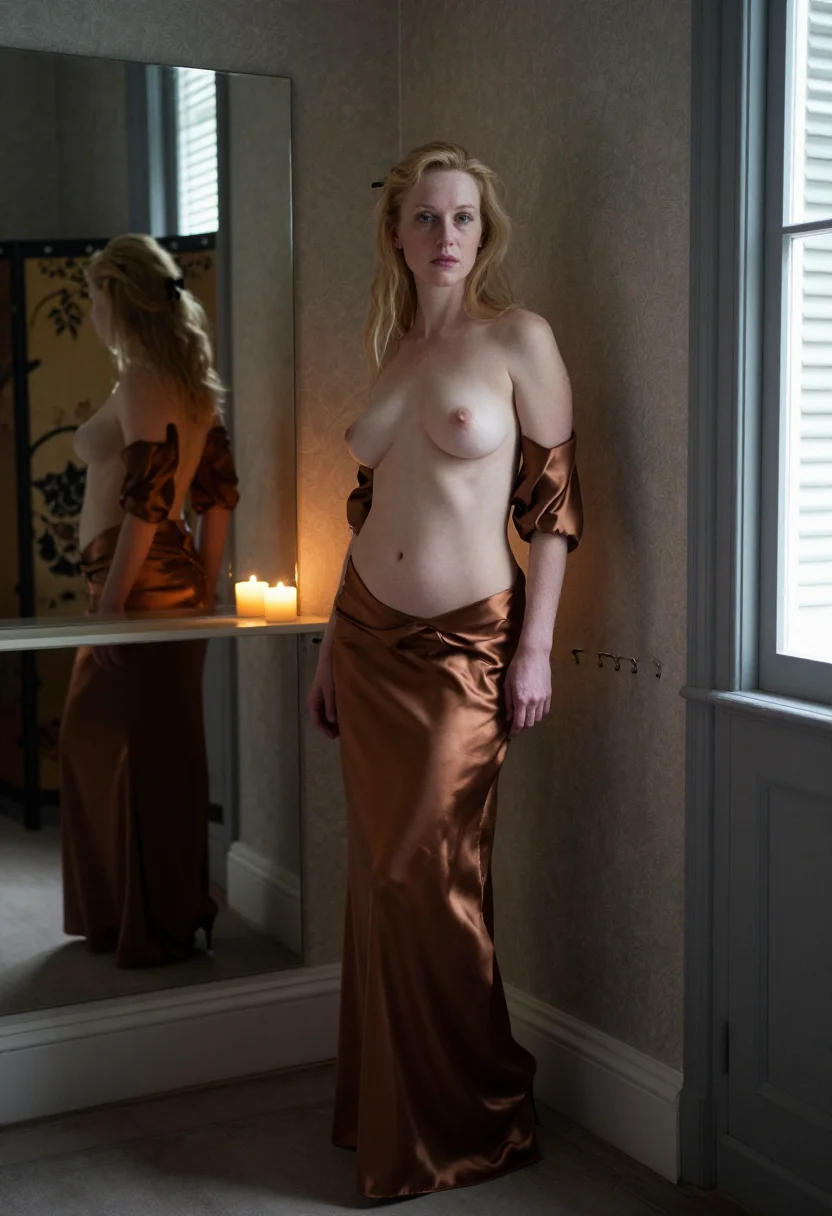
The candlelit boudoir opens at a marquetry vanity, one small near flame, faded rose damask behind. The emptied ballroom shifts wide and weak, chandeliers dimming after the last waltz, a champagne ballgown folded flat at the waist. The mirrored dressing room closes with two sources at once, cold grey daylight crossing warm candle spill, a bronze taffeta gown in tiers at the ankles.
Every photo is photographic in composition — candle falloff, the nap of wine velvet, the sheen of silk faille rendered from photographic principles. The muse varies by generation — Parisienne, Creole, freckled and fair — while the silhouette and palette stay fixed.
Frequently asked questions
- Who is the woman in these photos?
- An AI muse, generated for this pack. She has no name and no real-world counterpart — every frame is composed from a written scene, then rendered.
- What is the register of this pack?
- A period costume-drama register for adults, staged across three settings — the corset is drafted unlaced and the bodice drafted folded down from the first word of the prompt, always in candlelight and silk.
- How is this different from the Victorian Gothic pack?
- Paris versus the English manor, gilt versus crepe. Victorian Gothic is mourning dress — black lace, a funereal palette. This pack is the Second Empire court at its most upholstered — rose damask, wine velvet, champagne silk, gold candlelight.
- Who is the second figure at the edge of the dressing-room frames?
- The lady's maid, deliberately cropped at the shoulders with her hands still at the hooks — a pair of period cuffs and nothing more, no face, no second identity. Every frame keeps one muse as its subject.
- What are the three settings?
- The candlelit boudoir — a marquetry vanity, one near flame. The emptied ballroom — waxed parquet, dimming chandeliers. The mirrored dressing room — cold window light crossing warm candle spill.
- Who is in the photos?
- A muse you choose. 32 AI faces, none of them a real person.
Who This Pack Is For
- Period-drama and costume fans searching corset portraits or gilded age photos who want a historically specific 1860s series
- Anyone who wants one coherent 1860s Paris set instead of unrelated single generations
- People who prefer the restraint of a period drama register
- Adults curious about AI candlelit boudoir photography at an accessible entry price
About Ovid
Ovid is a house of pictures that were never taken. Most AI image tools ship one giant catalog of poses and aesthetics; the output looks like every other generated image on the internet. Ovid goes the other way. Each pack is a single editorial brief — light, styling, scene composed in the grammar of the great fashion editorials — hand-curated against real references and tested before it ships. Free preview before you pay. Packs are one-time. No template generator, no feed. A fashion house, not a catalog.